Plinko Casino UK: Games, Licensing and Payments
 Available in GB
Plinko can describe different game formats, while a casino’s UK-facing label alone says nothing about its regulatory status.

- Online Plinko Casinos in the UK Market
- How Casino Games Differ by Format
- Playing Plinko for Real Money: What the Evidence Supports
- Free Play and Bonus Terms
- What Can Be Established About Plinko Play
- UK Plinko Sites and the Offshore Distinction
- Assessing Claims About Plinko Slots
- Plinko Demo and Slot-Demo Availability
- Plinko Casinos, Withdrawals and the Meaning of the Game
- Crypto Payments at Plinko Casinos
Online Plinko Casinos in the UK Market
Casino games can be offered through online casinos where gambling is permitted by law. That broad availability does not, by itself, establish that a particular game appears in a particular operator’s catalogue. The distinction matters for Plinko: the existence of online casino gaming in the UK is not evidence that every UK-facing casino has a Plinko game, or that a site describing itself as a Plinko casino is operating within the UK regulatory system.
A specialist casino review has characterised the 2026 online market as having two parallel areas: UKGC-regulated operators and offshore platforms outside that system. This is a description attributed to that kind of review, rather than a settled classification of every service available to people in Britain. The regulatory distinction is material, however. Remote operators serving consumers in Great Britain must hold the relevant UK Gambling Commission licence, regardless of where the operator is based. A platform’s location or branding alone does not determine whether it is licensed to serve the British market.
When choosing a UK Plinko casino in 2026, payout timing is one practical detail to check. This list gives you that information for each operator.
Payout speed: 1-3 business days Chanze lists a payout speed of 1–3 business days.
Payout speed: 1-3 business days Jetsetspins lists a payout speed of 1–3 business days.
Payout speed: 1-3 business days SlotoSport lists a payout speed of 1–3 business days.
Payout speed: 1-3 business days EvoSpin lists a payout speed of 1–3 business days.
Payout speed: 1-3 business days NightWin lists a payout speed of 1–3 business days.
Payout speed: 1-3 business days NightLuck lists a payout speed of 1–3 business days.
Payout speed: 1-3 business days x3bet lists a payout speed of 1–3 business days.
Payout speed: 1-3 business days BeOnBet lists a payout speed of 1–3 business days.
Payout speed: 1-3 business days SpinFormula lists a payout speed of 1–3 business days.
Payout speed: 1-3 business days Zombillion lists a payout speed of 1–3 business days.
The term “online Plinko casino” can refer to different things in ordinary use. It might mean a licensed casino whose catalogue includes a game called Plinko, a site that promotes Plinko as a central attraction, or an offshore gambling platform that accepts UK players and advertises a similar game. Those descriptions are not interchangeable. In particular, promotional language does not establish a product’s precise rules, its regulatory status, or whether the operator is authorised to offer gambling to customers in Great Britain.
For a game to be considered part of an online casino’s offering, the relevant evidence would be the operator’s actual catalogue and the terms under which the game is provided. A broad casino label is not enough: online casinos can offer different selections, and a reference to Plinko in an advertisement or search result does not demonstrate that the game is available in the operator’s own service. Nor does the word “casino” establish that a particular product fits a specific game category. These distinctions are useful when interpreting descriptions such as “Plinko casino game” or “casino with Plinko”, which may be used loosely in promotional material.
The UK legal framework also makes the difference between a UK-facing casino and a UK-licensed casino significant. In Great Britain, online gambling is legal through sites holding the appropriate UKGC licence. Offshore casinos operate outside that regulatory system and do not hold a UKGC licence. The Gambling Act 2005 governs gambling in England, Wales and Scotland, but not Northern Ireland; the relevant licensing position should therefore not be reduced to a claim that every service accessible online is authorised for the whole UK. Access and regulatory authorisation are separate questions.

This is why the phrase “Plinko casino UK” should not be treated as a reliable description of a single, clearly defined market segment. It may point to interest in a particular game, but it does not identify which operator offers it, whether the game is actually available, or whether the operator is licensed locally. A site can be reachable from Britain without being part of the UKGC-regulated market. Conversely, an operator’s UKGC status does not establish that Plinko is among its games.
The distinction is especially relevant to claims about the “best” online Plinko casino. A ranking would require comparable, verifiable information about identified products and operators. A general claim that a site is “best” cannot be inferred from the game name alone, and a list of casinos using Plinko in their marketing would not necessarily show which ones provide the game or hold a UKGC licence. The label is therefore most useful as a description of the subject being sought, not as proof of a site’s product range or regulatory standing.
For the UK market, the clearest starting point is to separate three questions: whether an operator is licensed to serve consumers in Great Britain, whether its own catalogue includes a game presented as Plinko, and what the operator means by that label. These questions concern different kinds of evidence. The general availability of online casino games answers none of them by itself. Equally, a game’s presence in an online catalogue would not, on its own, establish that the operator is authorised to offer it to British customers.
Licensing Warning
Remote operators serving consumers in Great Britain must hold a relevant UK Gambling Commission licence, regardless of where the operator is based.
This careful distinction avoids treating every advertised “online casino with Plinko” as equivalent. The phrase can describe an intended game category, a promotional claim or a platform outside the UKGC system. The regulatory framework supplies a clear test for the operator’s status, while the game’s availability must be established separately from the operator’s own offering.
How Casino Games Differ by Format
Casino games can be grouped according to how they are presented and how outcomes are produced. These are useful distinctions, but they do not by themselves establish how a particular title works. A game described as Plinko, for instance, cannot be classified reliably from its name alone: the format and the mechanism behind its outcomes are separate questions.
Machine games
A gambling machine is generally designed for one player at a time and does not require a casino employee to conduct each play. The player interacts with the machine, while the game’s presentation and operation are handled through its equipment or software. Online casino games can reproduce this kind of self-directed format on a screen, although the presence of a screen does not, on its own, identify the mechanism that determines an outcome.
The term “machine game” therefore describes an arrangement of play, not a complete explanation of the game. It indicates that a player engages with a machine rather than taking part in a session run by a dealer. It does not establish whether the game uses random numbers, what its rules are, or whether it should be described as a slot.

This distinction matters when interpreting claims about a Plinko casino game in the UK. A title may be presented with a board-like visual, animated movement or a button-based interface, but those features alone do not prove that it belongs to a particular established category. The visual resemblance of a game to a familiar machine format is not enough to determine how its outcomes are generated.
Table games
Table games have a different social and operational structure. Players compete against the casino rather than against one another, and a croupier or dealer usually conducts the game. The dealer’s role is part of the format: the game unfolds through an organised sequence of actions rather than solely through an individual’s interaction with a machine interface.
An online version may present the same broad structure through a digital table or a live dealer, but the format should still be identified by how play is organised, not simply by its graphics. A screen showing a table does not necessarily mean that a croupier is involved, just as a machine-like interface does not settle how a game’s results are produced.
These categories are not interchangeable labels. If a description calls something a table game, the relevant question is whether the play is conducted in the dealer-led format associated with that category. A Plinko label alone offers no basis for treating a game as a table game, nor does a board-shaped display demonstrate that players are competing against a dealer or the casino in a table-game structure.
Self-directed format where the player interacts with equipment or software without a casino employee.
Dealer-led play where a croupier conducts the game and players compete against the casino.
Outcomes are determined by numbers generated by a computer or other gaming equipment.
Random-number games
Random-number games are defined by the mechanism used to select outcomes: numbers are generated by a computer or other gaming equipment, and selected random numbers determine the result. This describes how outcomes are produced, rather than whether play is conducted by a dealer or through a single-player machine interface.
That difference between presentation and mechanism is important. A game can look like a physical activity while relying on computer-generated selections; equally, the appearance of animation does not establish that a random-number system is being used. A description of the mechanism, rather than the visual style, is needed to support that classification.
For people considering a Plinko game, this means that terms such as “casino game”, “machine game” and “random-number game” should not be treated as synonyms. Each refers to a different aspect of a game. The first identifies a broad gambling context; the second concerns how play is arranged; the third concerns how outcomes are selected. A title might be described using more than one of these terms if the relevant details support them, but the label Plinko does not establish those details by itself.
Reading format descriptions
A casino Plinko game review may use familiar category names as shorthand, but those words are most useful when they are tied to observable information. A machine classification concerns individual interaction without a casino employee conducting play. A table-game classification concerns dealer-led play in which players compete against the casino. A random-number classification concerns computer- or equipment-generated selections. None of these descriptions follows automatically from a game’s name or appearance.
The same caution applies when Plinko is presented in an app or described as a slot. “App” identifies a way of accessing software, not a game category; “slot” is a separate classification that requires supporting details. Likewise, searches for a free Plinko casino game or a Plinko demo do not establish which format a particular product uses. Those questions concern availability, not the distinctions between machine, table and random-number formats.

A sound description keeps these concepts separate. It states what the player interacts with, whether a dealer conducts play, and what is known about outcome selection. Without that information, a confident classification of Plinko would go beyond what the name alone can show.
Playing Plinko for Real Money: What the Evidence Supports
A real-money Plinko listing can appear to promise a simple exchange: stake money, take part in a game and potentially receive a cash payout. That description does not establish how any particular Plinko product works, whether it is available through a UK-licensed casino, or what its chances of returning a profit are. Those questions require information about the individual game and the operator, rather than assumptions based on the name “Plinko”.
The general economics of casino gambling provide a relevant starting point. Casino games are structured to give the house a predictable advantage over the long term, while still allowing players to make gains in individual sessions. These statements are compatible: a player may receive more than was staked on a particular occasion, but the possibility of a short-term gain does not show that a game is favourable over repeated play. Nor does the general house-advantage principle establish a precise return, loss rate or payout pattern for Plinko.
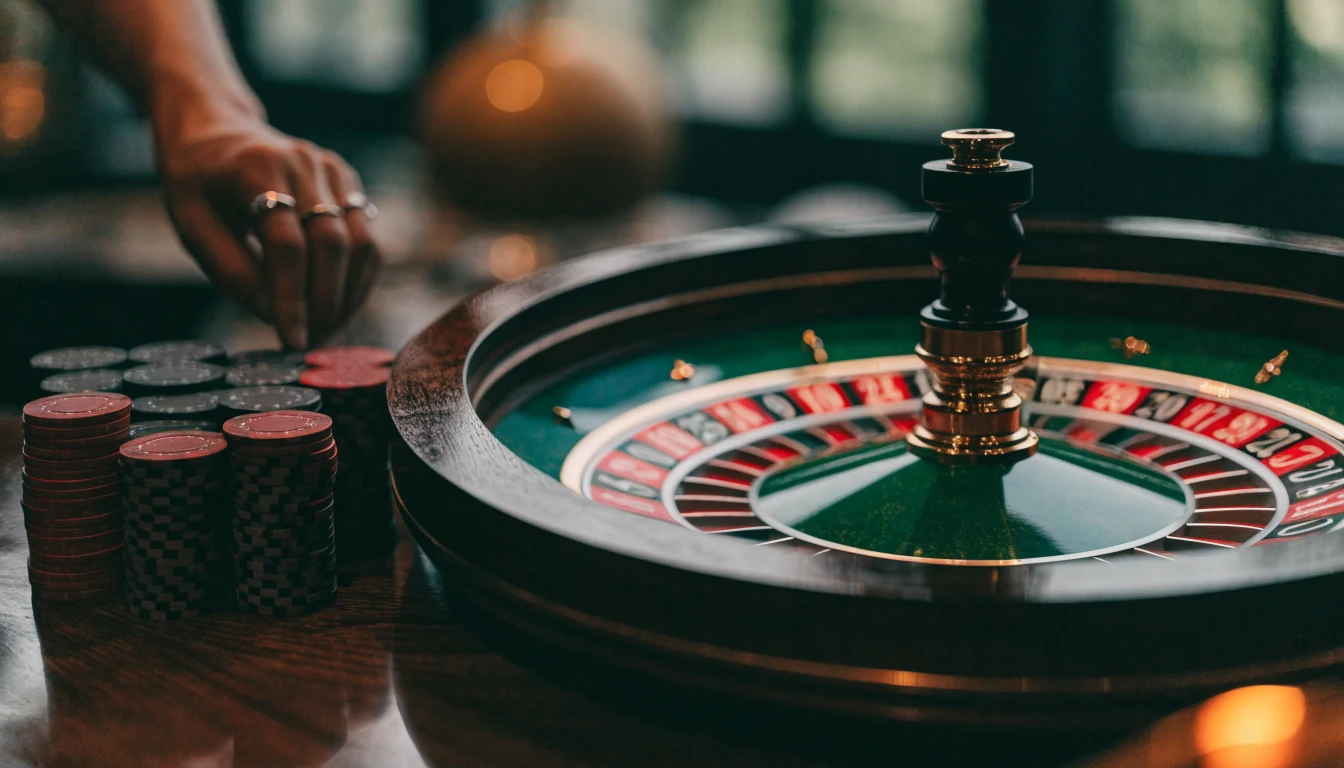
What a real-money label does—and does not—show
“Real money” indicates that play involves funds with monetary value, rather than only a non-cash demonstration or entertainment mode. It is not, by itself, evidence about a game’s rules or fairness. A Plinko casino game offered for money might be described in promotional material as a slot or as another type of casino game, but that wording alone does not verify its technical format or outcome probabilities.
The distinction matters when claims are made about how to win real money at Plinko. There is no basis for treating any strategy, claimed system or description of a Plinko slot machine as a reliable way to overcome a casino’s long-term advantage. Without game-specific information, it is not possible to calculate the likelihood of a particular result or to compare the expected return of one Plinko product with another. A Plinko slot review that gives precise payout claims would therefore need to identify the product and substantiate those figures.

The same caution applies to claims that a Plinko casino game is “real” or that a particular result is guaranteed. A game can be advertised under the Plinko name without the label establishing its precise operation. Cash stakes and possible cash prizes are separate from evidence about how outcomes are produced or distributed. Those details should not be inferred from the game’s visual theme, its title, or general descriptions of casino play.
Licensing in Great Britain
For real-money gambling offered to customers in England, Scotland and Wales, the operator must be licensed by the UK Gambling Commission (UKGC). This requirement concerns the company providing the gambling service; it does not certify every statement made about a named game, nor does it demonstrate that every website carrying a Plinko promotion holds the appropriate licence.
Accordingly, a review of a real-money Plinko casino in the UK cannot be assessed solely by its game description or advertising. The relevant regulatory question is whether the operator serving customers in Great Britain has the required UKGC licence. The presence of a Plinko title, a cash balance or a withdrawal facility does not answer that question on its own. Equally, an operator’s licence does not establish a particular Plinko game’s payout profile.
This distinction also limits what can responsibly be concluded from broad Plinko casino reviews. A general account of casino economics supports the expectation of a long-term house advantage across casino gambling, but it cannot supply a Plinko-specific percentage or prove that a named game offers a particular chance of winning. Such claims need evidence tied to the actual product. Until that is available, the defensible conclusion is limited: real-money casino play can produce short-term gains, while the casino’s advantage is designed to operate over the longer term, and operators serving Great Britain must meet the UKGC licensing requirement.
Attention: There is no basis for treating any strategy or claimed system as a reliable way to overcome a casino’s long-term advantage.
Free Play and Bonus Terms
“Free play” and a casino bonus describe different arrangements. Free play refers to playing without staking personal cash; a promotional bonus is value supplied under conditions set by an operator. A no-deposit bonus is a specific kind of promotion that can be received without first spending money. That does not make it equivalent to unrestricted free play: the bonus may carry conditions governing how it can be used and whether resulting funds can be withdrawn.
These distinctions matter when Plinko is mentioned alongside promotions. A general offer at a casino does not, by itself, establish that bonus funds can be used on every game there. The offer’s terms determine which products are eligible, how the funds are credited and what must happen before any winnings become withdrawable. Where the terms do not identify a particular game, the promotion should not be treated as Plinko-specific.
Wagering requirements describe the amount of betting activity required before bonus funds or related winnings can be released. In Great Britain, a specialist review reports that, from 19 January 2026, incentives cannot require wagering above ten times the bonus funds. The limit concerns the wagering condition; it does not mean that the bonus is cash, that a particular game qualifies, or that a player will recover the amount wagered. The offer’s other conditions remain relevant.

The same review reports that a single incentive cannot combine different gambling product types, such as casino play and betting, as conditions for unlocking one reward. This restriction makes the scope of an offer important: a casino promotion should not depend on completing a betting requirement as well. The wording of the terms should make clear which activity counts and what conditions apply.
A careful comparison of offers therefore begins with the substance of the terms rather than the headline value. The key points are whether the offer requires a deposit, which games or products qualify, how the wagering requirement is calculated, and what restrictions apply to cashing out. A promotion described as “free” may still involve conditions; the label alone does not explain the player’s obligations.
A free-play mode, where one is offered, is conceptually separate from promotional bonus funds. It may allow play without a cash stake, whereas bonus funds are promotional value governed by the operator’s conditions. Neither description establishes that a particular Plinko game can be played in that way, nor that a bonus can be applied to it. A mention of free spins likewise does not establish that a Plinko game is a slot or that spins are available for it.
For UK casino promotions, the distinction is consequential: free access concerns how a game is played, while bonus terms concern the conditions attached to an incentive. The wagering cap and the ban on mixed-product incentives set boundaries on those conditions, but they do not determine an offer’s eligibility rules. Accordingly, claims about free Plinko play, bonus-funded Plinko sessions or Plinko-specific spins need to be read as separate claims, not inferred from the presence of a casino promotion.
- Check the substance of the terms
- Verify which games qualify for the offer
- Identify the exact wagering requirements
- Rely on the headline bonus value
- Assume a “free” label means no conditions
- Treat general promotions as Plinko-specific
What Can Be Established About Plinko Play
A precise explanation of how Plinko works would need to identify the rules governing a particular version: what the player does, how the board is arranged, and how each result is determined. Those details cannot be stated as universal features of Plinko. The name alone does not establish a single set of mechanics, and a general description should not be treated as confirmation of the rules on a particular game.
One relevant point concerns random-number games as a broad category. In such games, selected random numbers are generated by a computer or other gaming equipment. That describes how this category may determine outcomes; it does not, by itself, establish that Plinko belongs to it. Nor does it explain the operation of any specific Plinko product. The distinction matters because a game’s visual presentation is not enough to identify the method used to determine its results.
The same restraint applies to the familiar question of how to play. Without a particular game’s rules, there is no sound basis for stating where a ball begins, how many paths are available, what choices a player makes, or how a result is recorded. Those details may be central to an individual version, but they should not be supplied as generic instructions unless the relevant rules have been identified. A description that assumes one layout or sequence could misrepresent another game using the same name.

Claims about how to win require similar care. A suggested pattern, timing method or choice of position is not evidence of an advantage. To assess such a claim, information would be needed about the game’s mechanics and the way outcomes are produced. The general fact that some games use computer- or equipment-generated random numbers cannot establish a Plinko-specific strategy, probability or predictable outcome. It therefore supports neither a winning system nor a claim that a particular approach improves results.
A careful account of Plinko play can consequently say less than promotional descriptions sometimes imply. It can distinguish the broad concept of random-number games from claims about any named Plinko version, and it can avoid treating familiar visual imagery as proof of a game’s rules. A concrete explanation would depend on the rules and technical description for the specific product in question. Without that identification, assertions about board layout, moves, result patterns or winning methods go beyond what can be established.
This limitation does not mean every Plinko game must work in the same way, or that none uses a random-number system. It means that neither conclusion follows from the name alone. The most reliable description is therefore product-specific: the rules should explain what actions are available and how results are generated. Until those details are established for a particular game, claims about how Plinko works should remain general rather than being presented as instructions or strategy.
Key Play Findings
- Game rules cannot be assumed from the name Plinko alone
- Visual imagery is not proof of a game’s technical rules
- No strategy can be proven to overcome random-number generation
- Product-specific rules are the only reliable source of information
UK Plinko Sites and the Offshore Distinction
A specialist review describes the UK online-casino landscape in 2026 as having two distinct parts: operators within the UK Gambling Commission (UKGC) system and offshore platforms outside it. That description is useful for understanding why a site may appear accessible to people in Britain without belonging to the regulated UK market. The two categories are not equivalent in legal status.
The Gambling (Licensing and Advertising) Act 2014 established the requirement for operators taking bets from British residents to hold a relevant licence. Accordingly, an operator’s location does not by itself determine whether it may legally serve customers in Britain. A business based abroad that offers gambling to British residents still falls within the licensing requirement. Offshore casinos that accept UK players but operate outside the UKGC system do not hold a UKGC licence; their willingness to accept customers does not establish that they are authorised to do so.

This distinction matters when a site is described as a Plinko casino or gambling platform. The label alone does not show whether the operator has a UKGC licence, nor does it establish that a particular game is available. Those are separate questions: one concerns the operator’s regulatory status, the other the site’s catalogue. A promotional description or a page aimed at British players should therefore not be treated as proof of either.
The same caution applies to “no deposit” offers associated with Plinko. That wording describes an advertised bonus structure, not a licensing category. It cannot establish that the casino is regulated in Britain or that the offer is available under the stated terms. The operator’s status must be considered independently of the promotion.
In practical terms, “UK” in a site name, description or marketing claim is not a substitute for UKGC authorisation. Nor does the phrase “accepts UK players” mean that a platform is part of the regulated market. The meaningful distinction is whether the operator holds the licence required to serve British residents. For a Plinko-branded site, that remains the central test of whether “legit” refers to a genuine game listing, a lawful operator, or merely a claim in the site’s marketing.

Assessing Claims About Plinko Slots
Calling a game a “Plinko slot” does not, by itself, establish that it belongs to the slot category. The label may combine a familiar game name with a broad casino term, but classification depends on how the particular product works, not on the wording used to describe it. The same caution applies to claims about a “best” Plinko casino: a superlative is meaningful only when the comparison is based on relevant, comparable evidence.
Casino games typically give the casino a predictable advantage over the long term, while still allowing players to make short-term gains. That general principle is useful context, but it does not determine the financial characteristics of any particular Plinko-labelled game. It cannot establish how often a game pays out, what a player might receive, or whether one version is more favourable than another.
A sound comparison would need to distinguish the casino from the game itself. A casino’s general reputation or range of games would not, on its own, show that a particular Plinko product has favourable terms. Equally, a game’s appearance or name would not prove that it has the mechanics or financial properties associated with slots. Claims about quality or value should therefore be read in light of what they actually compare and what evidence supports that comparison.
This matters when a title is presented as a UK Plinko slot or when a casino is described as the best place to play one. Such wording is not a substitute for clear information about the specific game and its terms. Nor does a broad statement about casino games’ long-term economics serve as a product-level assessment. It describes a general feature of casino gambling, not a ranking.

Accordingly, “best” and “slot” are claims requiring separate scrutiny. The first calls for a defensible comparison; the second calls for evidence about the game’s format. Neither can be established by promotional phrasing alone. A careful account keeps the general house-advantage principle separate from claims about individual Plinko games or casinos.
Plinko Demo and Slot-Demo Availability
A demo normally means a way to try a game without staking cash. The label alone, however, does not establish what is available: it may describe a playable practice mode, a preview or simply a page discussing the game. These distinctions matter when assessing claims about a Plinko demo in the UK.
Availability depends on the particular game and the platform presenting it. A page that refers to Plinko does not, by that description alone, establish that a playable demo is provided. Nor does calling a product a slot demo confirm that it is a Plinko game or that it can be launched without a deposit. Those claims require product-specific detail, such as a clearly identified game and an accessible play mode.

The same caution applies to phrases such as “free demo”. “Free” may refer to viewing information or a preview rather than taking part in a playable version. A description should make clear whether the game can actually be started, whether any account is required and whether the mode uses real stakes. Without those details, the label is not enough to establish the nature of the offer.
Casino games are available online where permitted by law, but that general availability does not establish that any particular title has a demo version. A Plinko-themed page and an available practice mode are separate claims. Likewise, the presence of a demo for one game would not establish demo access for another product, even if both are described using similar terms.
For this reason, references to Plinko slots or a Plinko demo are best read as descriptions that need to be checked against the actual product presentation. The wording should identify what is being offered, rather than relying on “demo” as a standalone assurance. No particular Plinko demo or slot-demo product can be treated as established merely because the term appears in a casino listing.

Plinko Casinos, Withdrawals and the Meaning of the Game
A casino described as offering Plinko combines a casino platform with a game presented under that name. The description alone does not establish the game’s rules, board design, outcome probabilities or even its precise format. Those details depend on the specific product and cannot be inferred from the word “Plinko”. Nor does the label establish that a particular casino makes the game available to UK customers.
Withdrawal information is a separate question from what the game is. Open Banking and Faster Payments have reduced friction in transferring money to and from online casinos, but payment infrastructure does not determine how quickly an individual withdrawal is approved or received. Processing can depend on the platform and the payment method. A specialist review source reports that many platforms offer instant deposits and withdrawals completed within hours rather than days; that is a report about platforms generally, not a guarantee for every casino or transaction.
The distinction matters when assessing claims about a Plinko casino withdrawal in the UK. A stated payment speed should be treated as a platform-specific claim, not as a feature of Plinko itself. The game’s name does not establish its withdrawal conditions, and a general account of payment rails cannot confirm a particular operator’s processing time. Any published conditions should therefore be read as applying to the named platform and payment route described, rather than to casinos with Plinko as a category.
The relevant UK context is that legal online gambling is provided by sites holding a current UKGC operating licence. This is distinct from the question of whether a site advertises Plinko or reports fast payments. Each claim concerns a different matter: game availability, regulatory status, or payment handling. Evidence for one does not demonstrate the others.

Accordingly, “casino with Plinko” is best understood as a description of a casino said to include a game called Plinko, rather than a defined game type or a promise of particular withdrawal performance. Payment speed remains specific to the platform and transaction, while the meaning of the game label should not be extended beyond what its product information establishes.
Crypto Payments at Plinko Casinos
Cryptocurrency and Plinko availability are separate questions. A casino may list digital currencies as payment methods, but that does not establish that it offers Plinko. Nor does a game listing confirm that cryptocurrency can be used to fund play. The two details need to be assessed independently.
A specialist review has reported that some alternative gaming platforms may accept Bitcoin, Ethereum and Litecoin alongside conventional cards and e-wallets. This is a limited, time-sensitive description of certain platforms, not evidence that any particular casino accepts those currencies or provides a Plinko game. Payment options can vary between operators, and a platform’s stated methods do not establish the terms that apply to a specific account.

For UK players, the payment method does not change the legal status of an operator. Online gambling is legal in the UK only through licensed and regulated sites; remote operators serving consumers in Great Britain must hold the relevant UKGC licence. A cryptocurrency option, by itself, is not evidence of that licence. Equally, a reference to Plinko and crypto in the same promotion does not prove that the game and payment method are both available to UK customers.
The practical distinction is therefore between a general claim about platform payments and a confirmed offer from an individual operator. Bitcoin, Ethereum and Litecoin are named in reporting about some alternative platforms, but that does not support a broader claim that UK Plinko casinos commonly accept crypto. Specific availability, account conditions and the operator’s regulatory status require separate confirmation.
Crypto should not be treated as a defining feature of Plinko. It is a possible funding method reported for some platforms, while the presence of the game remains a separate matter. No particular Plinko casino or crypto-enabled Plinko product can be identified on that basis.
Written by the editors at Spreadex Casino.