Online Casino Game Shows in the UK: What Is Known
 Available in GB
The category describes a style of casino content, while each title’s rules, presentation and outcomes require separate evidence.

- How Live Game Shows Differ from Other Casino Games
- The Scope of Online Casino Game Shows
- Live Casino Game Shows in the UK Context
- Assessing Claims About the Best Game Shows
- UK Casino Access and the Regulatory Framework
- Named Game-Show Searches and the Limits of the Evidence
- What Can Be Established About UK Game-Show Casinos
- Evaluating Claims About Live Casino Game Shows
- The Live Game-Show Casino Category
- Online Casino Game Shows: What the Evidence Supports
How Live Game Shows Differ from Other Casino Games
Live game shows occupy a recognisable place in the language of online casino entertainment, but the label does not by itself describe a particular game. It identifies a category of content rather than a complete set of rules, features or outcomes. That distinction matters because a category name can suggest a style of presentation without establishing how an individual title is played.
Casino games are often grouped by their apparent form: a title may be described as a slot, a table game or a game show. Such groupings help distinguish kinds of content, but they are not interchangeable with a game’s full specification. The category alone cannot determine what choices are available, how results are produced, whether participation involves a host, or what conditions apply to a particular round. Those details require title-specific information.
The word “live” also needs to be treated as part of a label, not as a complete technical description. It does not, on its own, establish what is shown on screen, how the activity is controlled, or how a result is reached. Nor does “game show” provide enough information to infer a familiar television format or a particular set of rules. A title may be placed in this category by a casino or provider, but that classification cannot substitute for its own explanation of play.
Choosing an online casino for game shows means checking the practical details as well as the entertainment on offer. This reference card highlights the payout information available for each option.
Payout speed: 1-3 business days Chanze lists a payout speed of 1–3 business days, a useful detail to consider when reviewing its payment information.
Payout speed: 1-3 business days Jetsetspins lists a payout speed of 1–3 business days, giving readers a stated timeframe to consider.
Payout speed: 1-3 business days SlotoSport lists a payout speed of 1–3 business days, providing a clear point of reference for its payouts.
Payout speed: 1-3 business days EvoSpin lists a payout speed of 1–3 business days, a practical detail for readers assessing its payment information.
Payout speed: 1-3 business days NightWin lists a payout speed of 1–3 business days, offering a stated timeframe for payouts.
Payout speed: 1-3 business days NightLuck lists a payout speed of 1–3 business days, which gives readers one concrete payment detail to consider.
Payout speed: 1-3 business days x3bet lists a payout speed of 1–3 business days, a useful reference when reviewing its payout information.
Payout speed: 1-3 business days BeOnBet lists a payout speed of 1–3 business days, providing a stated timeframe for payouts.
Payout speed: 1-3 business days SpinFormula lists a payout speed of 1–3 business days, giving readers a practical payment detail to weigh.
Payout speed: 1-3 business days Zombillion lists a payout speed of 1–3 business days, offering a clear reference point for its payouts.
This is one way live game shows differ from other casino games at the level of categorisation. The label carries an association with a show-like form of entertainment, while other broad labels may indicate a different kind of game. Yet the association is not proof of specific mechanics. Without reliable information about an individual title, it would be misleading to describe all live game shows as following the same structure or to contrast them with other categories on the basis of assumed features.
For the same reason, the boundary between categories should not be treated as a technical rule. A casino’s menu may place content under a particular heading, but menu placement does not establish how the title operates. The same applies to promotional wording, imagery and short descriptions. These can communicate how a product is presented, but they may leave unanswered questions about its rules, participation, result determination and other important details.
A careful comparison therefore separates three things: the category name, the way a title is presented, and the rules that govern play. The category name is a broad identifier. Presentation is the material through which the title is introduced or displayed. The rules explain what happens during play and how outcomes are determined. Confusing these levels can lead to claims that sound precise but are based only on the wording of a label.
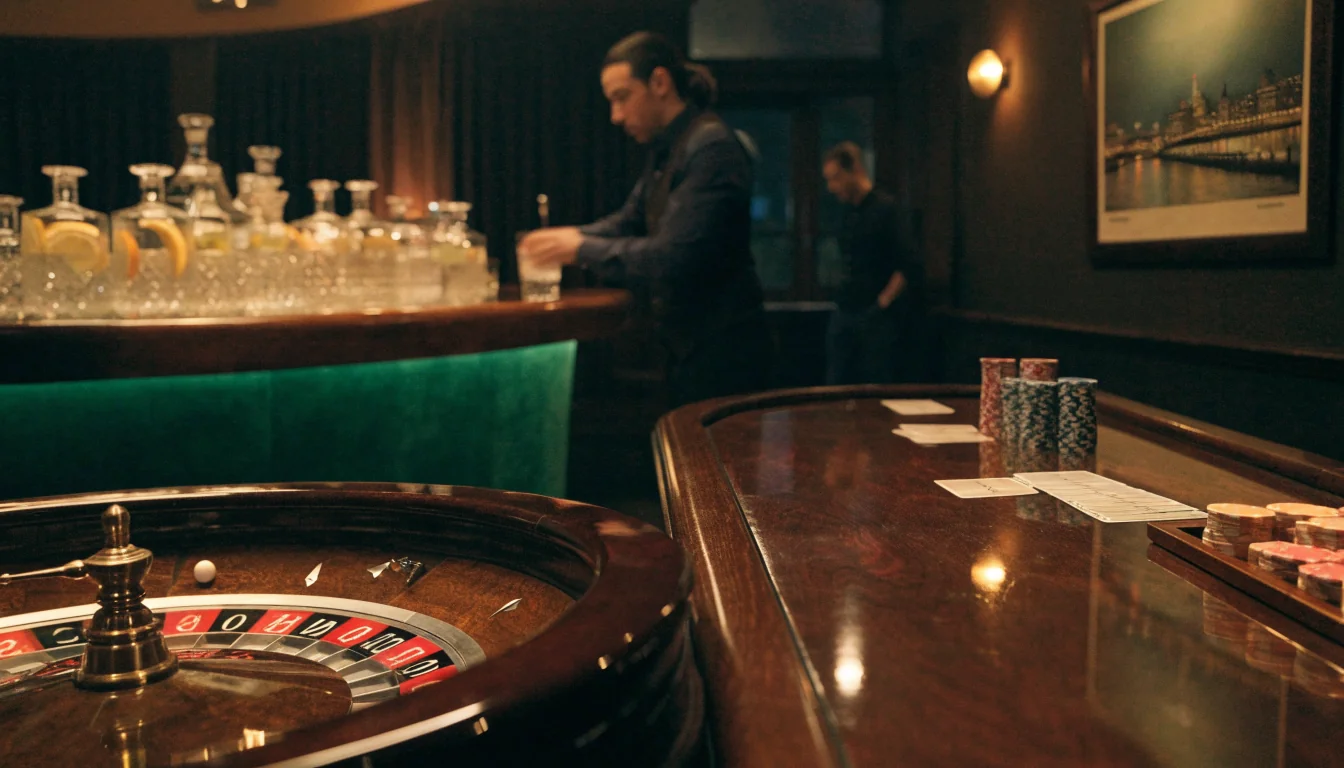

This distinction applies whether the content appears in a live game show casino, a general casino lobby or a section devoted to live entertainment. A location within a site can make the category easier to find, but it does not confirm that all titles listed there share the same format. Likewise, the presence of the word “live” does not establish the nature of any connection between the content and a real-time event. Such conclusions require information about the particular game, not assumptions drawn from its category.
The distinction is also relevant when comparing game shows with other casino content. A comparison can be meaningful only when it concerns features that are actually documented. For instance, a description of rules can be compared with another description of rules; a stated presentation format can be compared with another stated format. A category label alone provides too little detail for a reliable comparison of pace, player involvement, skill, chance or potential returns. Those qualities should not be inferred from the name.
A useful description of a live game show should therefore be specific to the title being discussed. It should identify the relevant rules and explain how the game is presented, rather than treating a broad category as evidence of those details. Where this information is unavailable, the accurate distinction is limited: the title is being grouped with live game show content, but its individual operation cannot be inferred from that grouping.
Accordingly, live game shows are best understood as a distinct category in the organisation and description of online casino content, not as a uniform game type with established shared mechanics. The category helps identify the kind of content being discussed; it does not, without further detail, explain what a particular game does.
A live game show is a distinct category in the organisation of online casino content, rather than a uniform game type with shared mechanics. The label identifies the kind of content but does not explain the specific operation of a particular game.
The Scope of Online Casino Game Shows
“Casino game show” is a broad label rather than a precise description of a single kind of game. It combines two ideas: a casino setting and a show-like form of entertainment. That wording can help distinguish the subject from conventional casino games in everyday discussion, but it does not, by itself, establish what a particular title contains or how it is played.
The addition of “live” narrows the phrase in one respect while leaving other questions open. It signals that the subject is being considered as live casino content, but it does not identify a particular format, provider, set of rules or presentation. Those details require separate information about the individual title. The label alone cannot serve as a substitute for that information.
This distinction matters because a category name can be useful without being technically exact. People may use “game show” as an umbrella expression for casino content they associate with show-style entertainment. Another description may be used for the same subject, or a title may be grouped differently by different sources. The wording therefore indicates an area of interest more reliably than it defines a settled catalogue.
What the label does and does not establish
The phrase “online casino game shows” identifies a subject at the intersection of online casino content and the idea of a game show. It does not specify whether the phrase refers to a genre, a marketing category, a particular product type or a loose collection of titles. Nor does it confirm that everything described with the label shares the same structure.


“Live casino game show” is similarly compact. Grammatically, “live” modifies the broader description, but the resulting phrase still leaves the relevant details unstated. It should not be read as proof of any specific feature beyond the way the content is being categorised in that description. A name or promotional label may set expectations; it is not a full account of the product.
The terms also carry different levels of specificity. “Casino game shows” can refer broadly to the subject, while “live casino game shows” makes the live-casino association explicit. Neither wording names a title. Neither establishes that a title is currently offered by a particular operator. These are questions of classification and availability, not meanings that can be settled by the category label alone.
Why wording varies
Descriptions of casino content are not always consistent across editorial, promotional and operator materials. A phrase may be chosen to make a product easier to recognise, while another source may use a different category or a title-specific description. Such variation does not necessarily show that the underlying product has changed; it may reflect differences in how the content is named.
The same caution applies to claims about the “best” live game shows or the casinos associated with them. In ordinary language, “best” may refer to different criteria: a person could mean suitability, presentation, familiarity or some other preference. Without a stated and consistently applied basis for comparison, the word is an expression of judgement rather than a measurable category. A broad label cannot determine which titles belong in a ranking, or how they should be ordered.
- Use category names as broad identifiers
- Treat presentation as the way a title is displayed
- Rely on specific rules to understand play and outcomes
- Treat category boundaries as technical rules
- Infer game mechanics from a menu label
- Assume promotional wording defines the rules of play
This is why category language should be kept separate from product claims. A description can identify the general subject under discussion without proving that a specific game exists under that label, that it is live, or that it is available at a given casino. Those propositions need their own support.
For readers, the useful interpretation is therefore modest: the phrase points towards online casino content presented or described in game-show terms, and the word “live” indicates an intended live-casino association. Beyond that, the wording remains open-ended. A precise account depends on the title and the information attached to it, rather than on the category name alone.
Live Casino Game Shows in the UK Context
For a UK audience, “live casino game show” is best treated as a description of a type of casino content, not as evidence that a particular title is available or that every operator uses the term in the same way. The wording brings together a live-casino setting and game-show language, but the label alone does not establish how a game is presented, who supplies it, or whether it can be accessed through a UK-facing casino.
That distinction matters because a category name can travel more widely than the products it describes. A title may be discussed in general casino coverage without being listed in a particular operator’s lobby. Equally, an operator’s use of a label does not by itself confirm that the content is currently offered to customers in Great Britain. Availability is a property of an individual operator’s catalogue at a given time, not something that can be inferred from a broad category phrase.


The UK context also requires care in separating the status of gambling businesses from the status of individual content. Remote gambling offered to consumers in Great Britain is subject to UK Gambling Commission licensing requirements, irrespective of where the relevant equipment is located. That market-wide framework does not establish which live game shows a licensed operator carries, nor does a provider’s presence in a casino catalogue prove that a particular title is a live game show. Regulatory status and content classification answer different questions.
A further source of uncertainty is the word “live”. In casino descriptions it may be used as part of a product category, but the word alone is not enough to establish the format or operation of a specific game. No general inference about presentation, participation, rules or outcomes follows safely from the label. Those details need to be tied to a particular, identifiable title and supported by information about that title. Without that connection, descriptions of how these games work risk turning a category name into an unsupported account of mechanics.
The same caution applies to references to UK availability. A game’s appearance in an international catalogue, promotional article or general discussion does not establish that it is offered to customers in Great Britain. A UK-facing listing would need to be checked against the relevant operator and the current content available there. Even then, the listing would support a claim about that operator’s catalogue, rather than a conclusion about the entire UK market.
It is therefore possible to discuss live casino game shows as a recognised search and content category, while remaining precise about what the category tells us. It indicates the subject matter people may be looking for, but it does not identify a confirmed UK selection, a supplier, or a standard format. Claims about those specifics require evidence attached to named products or operators; otherwise, the more accurate account is limited to the category itself.
UK Availability
A game’s appearance in an international catalogue or general discussion does not establish that it is offered to customers in Great Britain.
This restrained approach does not make the term meaningless. It helps distinguish a broad description from a verified statement about the British market. For UK audiences, the label can orient a discussion, but it cannot substitute for current product information. Claims about access, providers or operation should be made only where the relevant title and operator can be established, rather than inferred from the wording used to describe the category.
Assessing Claims About the Best Game Shows
Calling an online casino game show “best” is a comparative claim, not a simple description. It implies that several titles have been assessed against shared criteria and that one performs better than the others. Without a defined method and comparable evidence, a ranked list would express a preference rather than establish a reliable result.
The first difficulty is deciding what “best” means. A title might be judged by its presentation, pace, accessibility, rules, or suitability for a particular kind of player. These are different questions. A feature valued by one person may matter little to another, while a broad label such as “best game show” can conceal which qualities have actually been considered. A defensible assessment therefore needs to state its criteria before making comparisons.
Those criteria also need to be relevant to the category. A ranking cannot simply borrow measures designed for other casino products and assume that they settle the question. Nor does a title’s popularity, prominence in a casino lobby, or frequency of mention by reviewers establish that it is superior. Such indicators may show visibility or interest, but they do not by themselves demonstrate quality.


A sound comparison would require reliable information about each title, gathered on a consistent basis. Descriptions should be checked against the game’s own rules and presentation rather than repeated from promotional copy. If opinions are used, their scope should be clear: a personal review can report an individual response, but it cannot stand in for a systematic comparison. Equally, a list assembled from titles that happen to be easy to find is not necessarily representative of the wider category.
The word “best” can also suggest a single answer where the underlying preferences differ. One ranking might prioritise straightforward rules; another might value production style or a particular pace. Neither is universally authoritative unless its purpose and limits are stated. For that reason, a useful evaluation should explain who its criteria are intended to serve and avoid presenting subjective judgments as settled facts.
The UK context does not remove these methodological issues. A title’s presence in a casino does not, by itself, establish that it is the strongest choice in its category. Availability and quality are separate claims, and one cannot be used as proof of the other. The same applies to a list carrying a current-year label: a date can indicate when an assessment was prepared, but it does not make the comparison more rigorous.
For readers considering claims about the best online casino game shows, the most informative material is therefore not necessarily a numbered table. It is an explanation of how titles were selected, what evidence was used, and how each judgment follows from the stated criteria. Clear distinctions between observed features, reviewer opinion, and promotional language make conclusions easier to assess. Where those distinctions are absent, confident rankings should be treated as editorial assertions, not objective results.
Evaluation Standard
A meaningful evaluation requires identifiable titles, consistent criteria, verifiable descriptions, and conclusions proportionate to the evidence.
This standard does not rule out evaluating game shows. It sets the conditions under which an evaluation can be meaningful: identifiable titles, consistent criteria, verifiable descriptions, and conclusions proportionate to the evidence. Until those conditions are met, naming a winner or presenting a definitive shortlist would overstate what can be established. A careful account can describe the basis and limits of its comparisons; it should not turn an unsupported preference into a claim of fact.
UK Casino Access and the Regulatory Framework
Remote casino gambling in Great Britain is subject to oversight by the UK Gambling Commission. Its remit applies to gambling offered to consumers in Great Britain even when the equipment used to provide the service is located elsewhere. A casino’s physical location, therefore, does not by itself determine whether its remote gambling falls within the Commission’s regulatory scope.
The Commission is the sole regulator for commercial gambling in Great Britain. Its responsibilities include regulating online casinos, as well as other forms of gambling. This market-wide role provides the relevant regulatory context for services that may include live game-show content; it does not establish whether a particular casino offers that content or how any individual title operates.
The regulatory system distinguishes between licences for businesses and licences for individuals. The Commission issues operating licences to businesses and personal licences to individuals who carry out specified roles in gambling operations. These authorisations address different aspects of the regulated activity: an operating licence applies to the business, while a personal licence concerns an individual working within the sector. Neither licence category should be confused with a listing of particular games or a guarantee that a casino carries a particular type of content.


For remote gambling offered to consumers in Great Britain, the operator must hold the relevant UKGC licence. The legal framework does not turn on whether a service is described as an online casino, a live casino or a casino featuring game shows; the central question is whether remote gambling is being offered to consumers in the regulated territory. Accordingly, references to an online casino with live game shows do not, on their own, establish the regulatory status of the business behind it.
The Gambling Act 2005 governs gambling in England, Wales and Scotland. Northern Ireland is outside the scope of that Act, so the Great Britain framework should not be treated as a complete account of the rules applying throughout every part of the United Kingdom. For services aimed at consumers in Great Britain, however, the Commission’s remit applies regardless of where the key equipment is situated.
This distinction matters when interpreting descriptions of casino access. A game category, studio presentation or game-show label is not a regulatory classification in itself. Oversight attaches to the commercial gambling activity and the businesses and individuals involved in providing it. The existence of a UKGC licensing system establishes who regulates remote gambling in Great Britain; it does not confirm the contents of any casino lobby or certify a particular game as available.
The regulatory framework is therefore relevant to the setting in which remote casino services are supplied, rather than evidence of a specific live game-show offering. Claims about individual casinos or titles require separate, current confirmation and cannot be inferred solely from the Commission’s general remit.
Regulatory Scope
Remote gambling offered to consumers in Great Britain is subject to UK Gambling Commission licensing requirements, regardless of where the relevant equipment is located.
Named Game-Show Searches and the Limits of the Evidence
A title-led description can suggest a specific online casino game show, but the title alone does not establish what the product contains, who provides it, or where it is available. Those details require confirmation tied to the particular game and the relevant casino. A name appearing in a category label is not, by itself, evidence of a current offering or of how that offering works.
This distinction matters because several different claims can be attached to a named show. One may concern its format, another its provider, and another its availability at a particular operator. These are separate propositions; evidence for one does not automatically support the others. A description that identifies a title but does not establish the basis for its claims cannot reliably answer those questions.
The wording “live casino game show” also does not settle whether a particular title belongs to that category in a precise or consistent sense. The phrase may be used as a broad label, while a title-specific description may refer to a product with its own characteristics. Without substantiation for the individual title, it would be unwarranted to infer mechanics or presentation from the label alone.
Nor does a title’s association with casino content establish that it is available to UK players. Availability can depend on the operator and its current offering. A title mentioned in a general description should therefore not be treated as proof that it appears in a particular casino’s games list. Equally, a casino’s broad reference to game shows does not demonstrate that it carries every title associated with that category.


The same caution applies to comparative statements. Claims that a named show is popular, distinctive, widely available or preferable require evidence relevant to that claim. A title’s prominence in promotional language does not establish a measurable comparison with other shows. Without a substantiated basis for the comparison, such descriptions remain assertions rather than findings.
Careful wording can preserve what a title-led description does communicate: it points towards an individual product presented in connection with casino game shows. It cannot, on its own, support a detailed account of the product, a recommendation, or a statement about UK availability. Those conclusions require title-specific information and, where availability is at issue, confirmation from the operator’s current listing.
This is a narrow but important boundary. Recognising that a name refers to a particular show is not the same as knowing its format or status. Keeping those claims separate prevents a label from being mistaken for a verified description and avoids presenting speculation as fact.

What Can Be Established About UK Game-Show Casinos
Whether a UK casino offers live game shows is an operator-specific question. It cannot be answered from the broad label alone: a casino’s general range of online games does not establish that live game shows are included, and a reference to live content does not identify which titles are available. Without current, operator-level evidence, no reliable list of UK sites offering this category can be set out.
This distinction matters because product availability is not fixed by a casino’s overall identity. A site may provide a range of casino games without carrying every kind of content associated with that market. Nor does the use of similar promotional language establish that two operators offer the same games or experiences. Claims about a particular casino therefore need to be supported by information that refers to its current catalogue, rather than inferred from broad descriptions.
Attention: A casino’s general range of online games or a reference to live content does not identify which specific titles are available; this requires current, operator-level evidence.
The same caution applies to claims about which casino is best for live game shows. A ranking would require evidence that the listed operators offer the relevant content, alongside a consistent basis for comparing it. Without those foundations, a comparison risks treating an unconfirmed product listing as fact. No operator names can be responsibly presented as recommendations or as a verified selection on that basis.
The phrase “live game shows” also needs to be tied to the product being assessed. A casino’s catalogue might include live content without making clear whether it falls within this particular category. Conversely, a page referring to game shows may not provide enough detail to establish that a live version is available. Labels alone are not a substitute for a clear description of the games offered.
A sound assessment would distinguish between a casino’s general claims and details that can be checked against its current game catalogue. It would also avoid carrying old availability information forward as if it were still valid. A listing can change, so evidence about one operator at one point does not automatically establish present availability elsewhere or at a later date. In the absence of that level of confirmation, specific site claims should remain unresolved.
This does not mean that UK casino sites cannot offer live game shows. It means that the existence of a category and the availability of particular titles at particular casinos are different claims, each requiring its own support. The first is a broad description; the second requires evidence tied to an operator and its current offering.
Accordingly, a careful account of UK game-show casinos should not turn general industry language into a list of confirmed providers. It can identify what would need to be checked, but should not imply that any named casino carries live game shows without direct, current confirmation. Nor can it rank sites on the basis of that unestablished availability.

Evaluating Claims About Live Casino Game Shows
Calling a live casino game show “best” is a comparative claim, not a description. It requires a defined basis for comparison and evidence that applies consistently across the options being assessed. Without those elements, a ranking is an opinion or promotional label rather than a conclusion that can be independently checked.
A useful assessment begins by asking what “best” means in context. It might refer to production quality, ease of understanding, accessibility, or some other stated feature. These are distinct criteria: a title that scores highly on one does not thereby lead on every other measure. A credible comparison should identify its criteria before presenting a winner, rather than selecting a favourable feature after the fact.
The evidence also needs to be comparable. If one assessment considers a different set of titles, uses a different method, or relies on information collected at another time, its results may not support a direct ranking. The date and scope of an evaluation matter because online casino content and its presentation can change. A claim that omits those details provides little basis for judging how broadly its conclusion applies.
Language such as “top-rated” or “most popular” needs particular care. Such wording implies a measurable result, but the label alone does not reveal who supplied the rating, what was measured, or how the comparison was conducted. A popularity claim, for instance, should be tied to a defined measure rather than treated as proof of quality. Promotional copy can express a preference, but it does not establish an independent comparison.
Criteria for “Best” Game Shows
Meaningful assessments must define whether “best” refers to production quality, ease of understanding, accessibility, or other stated features, as a title scoring high on one may not lead on others.
For live casino game shows, a defensible shortlist would therefore need named entries, transparent criteria, and evidence gathered on a consistent basis. It should also distinguish measurable attributes from subjective judgements. Where the method is not disclosed, a ranked presentation may still be useful as an editorial selection, but it should not be mistaken for an objective verdict.
The phrase “best online casino live game shows” can describe several different expectations, so one universal ranking would require a clear account of what is being compared and why. A careful evaluation separates that question from the mere presence of confident claims. Until a comparison establishes its scope, method, and supporting evidence, “best” remains an unsubstantiated description rather than a reliable finding.
The Live Game-Show Casino Category
A live game-show casino is best understood as a category label, not the name of a single game or a particular casino. Its wording brings together three ideas: a live presentation, a game-show association and a casino setting. That combination can help describe the kind of content being sought, but it does not, by itself, establish what a specific offering contains.
The label also leaves important details unresolved. It does not identify a title, explain how a game works, name its provider or show which operator makes it available. Nor does the phrase alone confirm that an offering is genuinely live rather than using the term as part of its description. Those points require information about the particular product and its source.
This distinction matters when comparing descriptions. Two offerings grouped under the same broad label cannot be assumed to share rules, presentation or technical features merely because both are called game shows. Equally, a casino’s use of the category does not establish that every item within it has the same status or characteristics.

The category therefore has a limited but useful meaning: it identifies a general subject area while leaving product-level claims open. A precise account would need to connect the label to a named offering and supporting details. Without that connection, statements about individual formats, providers or casinos go beyond what the category itself can show. The term can organise discussion, but it cannot serve as evidence for claims about a particular game or its availability.
Online Casino Game Shows: What the Evidence Supports
The phrase “online casino game shows” identifies a subject, but it does not by itself establish what a particular title involves or where it can be played. A label may be used broadly, and its presence in a description is not enough to confirm a game’s format, rules, or availability.
Those points require separate evidence. A reliable account of a title would need to identify the game and its provider, explain its rules from an authoritative description, and distinguish those details from promotional wording. A claim that a casino offers it would need support from that operator’s current catalogue or another direct, up-to-date record. Evidence for one title or site would not establish a general feature of the wider category.

This distinction matters because descriptions can imply more than they demonstrate. Terms such as “live”, “interactive” or “show” should not be treated as proof of a particular production method, presentation, or way of playing unless the relevant details are documented. Nor does a category label establish that a game is available to every customer or remains listed over time.
A careful account can therefore define the subject as a form of casino-related content without assigning unverified mechanics or naming supposed examples. It can also make clear that conclusions about individual games and casino catalogues depend on specific, current evidence. Where those details have not been established, a confident recommendation or comparative judgement would go beyond what can responsibly be said. The useful boundary is between a recognised label and substantiated claims about the content it describes; the former does not, on its own, prove the latter.
What is the new UK slots stake limit, and how does it affect Amatic games?
The limit is £5 per game cycle for players aged 25 and over, and £2 for those aged 18 to 24. It applies to online slots, including Amatic games, at UK-licensed casinos.
Are Amatic casinos safe and regulated in the UK?
Amatic is a software supplier, not a casino operator, and holds a UK Gambling Software (Remote) licence. For deposits, payouts and customer support, use a UK-licensed casino, which is responsible for those services.
Do Amatic slots come with their own welcome bonus or free spins?
No, Amatic does not operate consumer-facing casinos or issue its own player bonuses. Promotions are offered by the casino; 32Red, Betfred and bet365 offer free-spin wins with no wagering requirement.
Are Amatic games licensed and legal to play in the UK?
Yes, Amatic holds a UK Gambling Software (Remote) licence, and its games are distributed to UK players through UKGC-licensed casino operators. The operator, rather than Amatic, handles bets and player accounts.
What are the wagering requirements at Amatic casino bonuses in the UK?
The UK Gambling Commission’s 10× cap on wagering requirements for bonus funds took effect on 19 December 2025. Check the casino’s offer terms for the wagering requirement that applies to a specific bonus.
Which licensed UK casinos carry Amatic slots?
Operators listed as carrying Amatic games include Betfred, Bet365, William Hill, Virgin Games, 32Red, 888casino, Sky Vegas, Betway, Betvictor and Betfair. Availability can vary, so check the casino’s current game list before depositing.
Can I get free spins on Amatic slots at UK casinos?
Yes, 32Red, Betfred and Bet365 offer free-spin wins with 0× wagering, so winnings are credited as cash. The bet365 offer requires a £10 minimum lifetime deposit and distributes up to 500 spins over 10 days.
Written by the editors at Spreadex Casino.